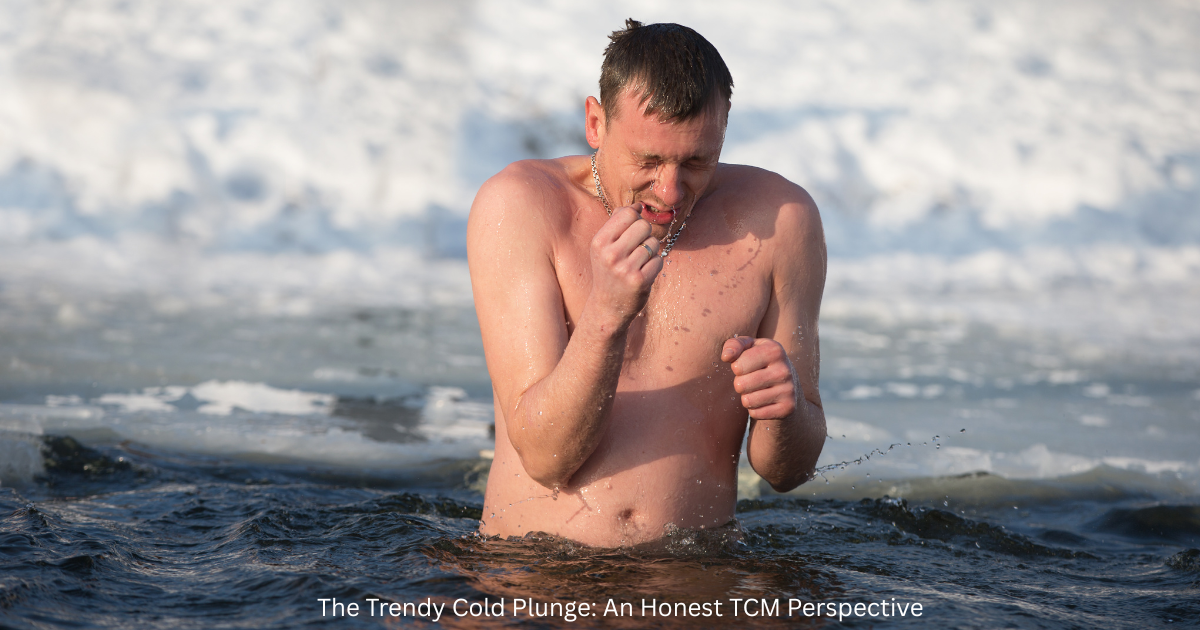
Cold plunge therapy has exploded in popularity in recent years. From icy ocean swims to backyard ice baths, people are immersing themselves in freezing water, often daily, in the hope of improving mental clarity, mental resilience, boosting immunity, or supporting overall health.
Cold plunges have been around for centuries, but have definitely become more popular in recent years – probably because of social media, the wellness culture, and biohacking trends.
Social media and the internet are full of glowing testimonials about increased energy, reduced anxiety, and a sense of mental reset after a cold plunge.
But what does this practice actually do to the body? What does Traditional Chinese medicine say about it? Also, is it as universally beneficial as it’s often portrayed? Is it always beneficial or could it ever be harmful?
What happens to your body when you cold plunge?
When you submerge yourself in cold water, your body reacts in stages. The first stage is the immediate stage where the cold is seen as an emergency for your body and your emergency systems react. You suddenly gasp, which increases your breathing rate. Your heart rate and blood pressure rise suddenly, which then activates your body’s sympathetic nervous system (fight or flight mode). The blood vessels in your skin narrow to preserve core warmth, and then you have a quick release of stress hormones like cortisol in order to heighten alertness.
The second stage is within a few minutes, where your body starts to release endorphins and dopamine, your breathing starts to slow down, and metabolism starts to increase to generate heat. Your sympathetic nervous system is still on high alert.
The third stage is post-plunge. Your body starts to feel warmer because blood vessels begin to dilate, and your parasympathetic nervous system starts to be activated to make us feel more relaxed.
So you are probably at this point thinking that this all sounds great, right? It sounds like it can be beneficial or your body. Well, let’s dive into the Traditional Chinese Medicine perspective (TCM) of cold plunges because that story is a lot more nuanced.
The Traditional Chinese Medicine Perspective of Cold Plunges
In Traditional Chinese Medicine (TCM), we are constantly discussing the opposites of yin and yang. Yin is the cold energy of the body, while yang is the warm energy. For the body to be in optimal health, these energies of yin and yang must be in balance and work harmoniously together.
In TCM, we also have a central concept of Qi which is supposed to flow smoothly in the body. Qi can be referred to as “energy” or “life force”. Qi moves the blood along with it, which then nourishes the tissues and organ systems.
In TCM, there are six pathogenic factors that are the excess from our environments. These can cause imbalance or disease. They include heat (or fire), cold, dryness, summer-heat, dampness, and wind.
Cold is one of these “pathogenic factors” and the characteristic of cold is that it constricts, congeals, and slows. It causes things to stiffen, tighten, stagnate, or retreat inward.
Cold has a negative impact on Qi (energy) and blood flow, it can stiffen the tendons and muscles, it can weaken the digestive fire, and deplete our body’s yang (warming) energy.
Yang energy governs warmth, metabolism, and vitality in the body. Prolonged cold exposure damages this yang energy. Organs like the Spleen and Kidneys are particularly vulnerable to cold, and these organs play central roles in digestion, energy production, and reproductive health. This is especially the case in those people who are constitutionally yang and Qi deficient.
Yang Qi and Wei Qi: As I said already, yang qi is the body’s heat or warming system. A term you may not be familiar with is Wei-Qi. Wei-Qi is the body’s defensive system and circulates just under the skin and along the body’s exterior channels. Wei-Qi is the body’s first line of defense against pathogenic factors as it protects the body’s surface. If the wei-Qi is strong, one can tolerate cold and other pathogenic factors. The problem with cold plunges is that the cold causes the body’s wei-qi to move inward to protect the organs and the yang qi to contract. If the body’s wei-qi and yang qi is adequate/robust, then cold plunges can be a healthy exercise – in moderation of course.
Signs that Cold Plunges are depleting your Yang energy:
- Feeling cold or fatigued afterward
- Sluggish digestion or loose stools
- Cold hands and feet
- Increased stiffness in joints and muscles
- Menstrual cramps or irregular menstrual cycles
When cold plunges can be therapeutic
Not all cold exposure is harmful. In fact, when used appropriately, it can clear excess heat. Individuals who are very robust and strong with abundant yang energy find cold plunges very beneficial. Some signs of people with excessive heat are those who overheat easily or sweat excessively, have a red face, feel agitated or restless, or are irritable.
But having said this, even those with heat signs should be careful. The principal of balance and moderation remains. Cold should be balanced with warmth, just like yin should always be complemented with yang.
Why Women Are Especially Affected
From a TCM perspective, women are more sensitive to cold because their reproductive system relies on warmth to function optimally. The uterus (Bao Gong) is considered a warm, life-giving center. Cold invasion can cause stagnation of Blood and Qi in the uterus, showing up as:
- Painful period cramps
- Irregular or delayed periods
- Blood clots during menstruation, dark menstrual blood
- Infertility or difficulty conceiving
- Lower back pain or abdominal pain
- Cold hands and feet, cold belly, cold nose
For women, especially those trying to conceive or supporting hormonal balance, preserving internal warmth is critical. Regular cold plunges may temporarily invigorate, but they risk depleting deeper reserves that support long-term reproductive and overall health.
How Cold Plunging Affects Men
Men are generally more tolerant of cold exposure than women, but it is still not advised that men overdo it. TCM recognizes that Kidney Yang, the energy that supports vitality, metabolism, and reproductive function in men, can also be depleted by excessive cold. Chronic exposure may lead to:
- Lowered energy and fatigue
- Reduced sexual function or libido
- Weaker immunity
- Cold symptoms
While men may recover more easily from brief cold exposure, repeated plunges or extremely cold conditions still place stress on the body’s systems and can affect long-term health.
Effects Beyond Reproductive Health
Cold plunging doesn’t only affect reproductive health. Other systems can be impacted:
- Digestive Health
Cold constricts blood vessels and slows digestion. For people with weak digestion or Spleen Qi deficiency, cold exposure can exacerbate bloating, loose stools, or poor nutrient absorption.
- Immune Function
Short-term cold stress can stimulate immune activity, but frequent or extreme cold can exhaust the body’s Yang energy, making it harder to fight infections in the long run.
- Mental Health
Some people feel an immediate mental boost from cold plunges. However, if the body is constantly stressed by cold, it may actually elevate cortisol levels and anxiety over time.
- Musculoskeletal Health
Cold causes muscles and joints to tighten. For some, this can increase tension or even worsen chronic pain conditions if done excessively.
The Middle Path – Respect your constitution
The key point in TCM is balance and honoring your body’s constitution. Everyone is unique – unique in terms of constitution, energy levels, environment, timing, and health status. This means that for some, cold plunges will benefit them, while for others, cold plunges can deplete them.
Women with cold extremities, low energy, painful periods, or fertility concerns should prioritize building warmth and supporting Yang energy rather than engaging in daily ice baths. Men should also be mindful of excessive cold exposure if they experience fatigue, low libido, or digestive weakness.
If you have tried cold plunging, and enjoy it, here are some tips:
- keep cold plunging short – 30 seconds to a few minutes is usually plenty of time
- Avoid cold plunging when you are sick, tired, during your menstrual periods, or during very cold weather
- re-warm the body after cold plunging with warm teas like ginger tea
- always listen to your body’s signals – if you feel very depleted after a cold plunge, then it may not be the right timing or the right fit for you
Warming Practices That Support Health
Instead of regular cold plunges, consider practices that preserve internal warmth and strengthen the body naturally:
- Warm drinks and meals: soups, teas, and stews that nourish the Spleen and Kidneys
- Gentle movement: Qi Gong, yoga, or walking to support circulation and energy flow
- Acupuncture and moxibustion: targeted therapies to strengthen Yang, improve digestion, and support reproductive health
- Layering and warmth preservation: keeping the feet, lower back, and abdomen warm, especially during cooler seasons. Wear warm socks and slippers, and do occasional foot soaks.
Takeaway
While the cold plunge trend can feel exciting and invigorating, it’s not a one-size-fits-all health solution. From a TCM perspective, protecting internal warmth is vital, especially for women’s reproductive health and overall vitality. Occasional cold exposure may be fine for healthy, Yang-strong individuals, but frequent or extreme plunges can deplete energy, impair digestion, and disrupt reproductive and hormonal balance.
As there are plenty of trends out there, especially in this age of social media, I believe it is important to always ask ourselves a question before following the latest trend: Is this going to nourish my Qi or is it going to deplete it? As a TCM doctor, I believe that true wellness is about honoring your body, understanding your body’s constitution, and building and nourishing it on a daily basis.
With Love and Support,
Dr. Maryam